Monday, February 4, 2008

Casino on Big Lagoon?

There is a Rancheria adjacent to Big Lagoon, composed of a small group of Yurok and Tolowa tribe members, that has seriously considered building a casino on its shores for some time.

I remember a few years ago a friend and I canoed to that part of the shore and saw the foundation for a large buidling, that had been abandoned, and that had been grown over with blackberry and jubata grass. Well, the foundation was for the casino. According to my dad, the foundation has been around since at least 1996. But nothing has happened so far, and this video explains why.

But the latest word is that the US Department of the Interior is NOT going to let them build in Barstow.

Concerns about impacts on water quality, endangered species and scenery from a
casino on serene Big Lagoon had state environmental agencies and conservation
groups supporting the Barstow compact. With that upended, and the tribe pushing
harder for a casino on their reservation, a battle is likely over who approves
the project. The California Coastal Commission has vowed to sue, claiming that
states which adopt federally approved coastal programs have the right to review
federal projects, like an Indian casino.

(Full story from the Eureka Times Standard.)

A casino and its tourists would be a serious ecological, aesthetic, and personal tragedy. I worry about the Rancheria, but this is not (morally and culturally) the right answer to their problems. I feel it in my bones. While the lagoon is not in immediate danger, I must keep up with story and prepare my war cry.

Sunday, February 3, 2008

Dark Forest Meditation


Susan from Garden Rant said that the Secret Garden was “simply too other-worldly for us to relate to.” But this is exactly the kind of garden I do relate to. And it seems that Piet Oudolf has been making mystical gardens like this for sometime.

What is it about the other-worldly, “dark Forest” gardens that appeals to me, anyway?

At the library, I stumbled upon a book called “The Power of Myth,” which is based on an interview between Bill Moyers and the late scholar of comparative mythology, Joseph Campbell. (I highly recommend it—it seriously reopened my heart to religion.)

I think there are a couple of “dark forest” things going on in my mind.

1. Anima mundi….the animated world, the world full of soul and souls. What do you think about this? Too pagan or romantic for your tastes?

I thought I had uprooted (or at least suspended) my belief in things like God four or five years ago. But to my surprise, beneath my former religion was the simple idea of anima mundi. I don’t even know where I picked this up (and I just found the term for the idea), but I believe it. Sure it’s a romantic idea, that the jay is our brother, that the same spirit runs through all of us, and that we can “Paint with All the Colors of the Wind.” But to me, it means that we are all part of the mystery of life. It means respect and reverence toward the people, animals, plants, and things around us.

2. The Hunter. Something interesting I learned in the Campbell book was that in the land of Canaan the people were farmers and they worshipped a goddess. The Children of Israel were hunters and shepherds and they worshipped the male god, Yahweh, who, according to Campbell, was a war god. It’s not surprising then that the Children of Israel ransacked Canaan, and not the other way around. I’m not a religious scholar. Let me just move onto my point: The farmer and the cowman should be friends. Everything needs a balance of yin and yang, of animal and plant, of masculine and feminine. I think the “dark forest” element in the garden is important to me because it makes the garden more animated, more manly, and, like Ellen said, more visceral.

But there will be no animal sacrifices in the garden.

3. History. I like moss, lichens, patina, ware, rust, and signs of past life, like this chimney on a trail in Petersburg, Alaska (Here with my brother, Peter the Tourist, last summer).


4. Nostalgia. When I was in middle school I was obsessed with the Prydain chronicles by Lloyd Alexander. It was, you know, about a boy who wants crazy adventures, gets caught up in them, wanders the land trying to find himself, finds his ancestry and inner strength, and becomes king. Campbell would have called this the classic hero myth, right up there with The Odysseus, Luke Skywalker, and King Arthur.

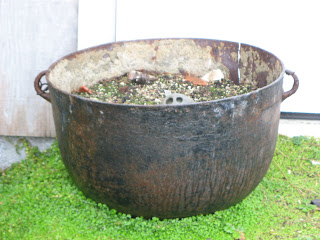
My neighbor's planter reminds me of The Black Cauldron. It could use some plants.


Friday, February 1, 2008

Snow in Bayside


Last Sunday it snowed in Bayside! In the seven or so years we've been in the area, it has never snowed. The bulbs coming up will be alright, right?

Sunday, January 27, 2008

Expression


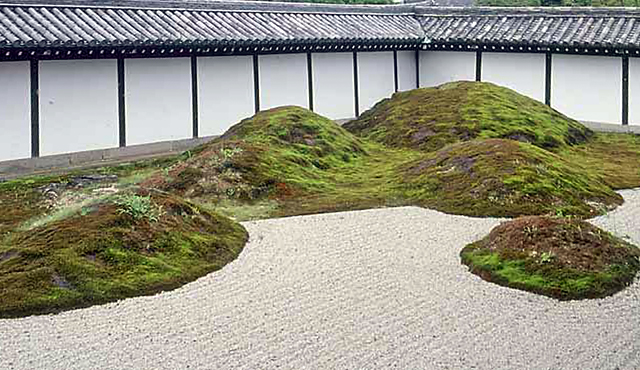
Inch for inch, Japanese dry gardens pack a lot of power. But I'm glad that it's contained to a small courtyard because (inch for inch) it's not the greatest space for biodiversity or productivity.

And if it sprawled out, it would lose its magic and become a golf course.

I like a healthy balance of modernism and postmodernism. I like beauty and the sublime, but there is more to life than aesthetics. There are other things to express, and there are means for expression other than color, form and texture. I don't have to limit myself to expressing one thing either (as cool as that focus is in the dry garden).

Here are some of the things I’m trying to express in Bayside:

1. The value and coolness of local biodiversity. Leave a brush pile for the shrews. Encourage the Scrophularia. Call it performance art.

2. The dark forest myth. (It’s not clear why exactly, but this really resonates with me. The surrounding landscape and those fantasy novels I read as a kid are probably responsible.) This, at least in part, is leaving the creepy side of nature intact and the idea of artifacts.

3. Stewardship. Our need of the land, and the land’s need for us. I became a gardener a few years ago to make everything in Bayside look “natural.” I now like the idea of coppices, crops, and compost piles within the wilder landscape. I am especially drawn to traditional land management techniques like burning and coppicing. Sometimes I use a stick to dig my planting holes, no joke. This is partly responsible.

What I’m really trying to express is my idea of paradise. For me, paradise is not just “pretty.” It’s ferociously beautiful, diverse and productive. And I get to live in it.

Quick Garden Update

The last time I worked in the Bayside garden was a week ago (I’m still at Big Lagoon). I noticed that some of the Penstemon heterophyllus cuttings have rooted. The lily seeds have not germinated yet (and neither have the Clintonia andrewsiana seeds). Triteleia laxa has sent up leaves, as have the daffodils and tulips in the herb garden, but the Lilium pardilinum has not. A bunch of Lupinus polyphyllus volunteers have popped up in the herb garden. I’ll move them to the Coastal Prairie when they’re a bit larger.

Friday, January 25, 2008

Garden Lightening

(not my picture.)


I have never been to a real Japanese dry garden, but when I first understood that the gravel was the sea and that the rocks were islands I wanted to tell someone. Suddenly, this small space was an entire world, and me a tiny thing. Electric.

Thank you, books and photographs.


I wonder if anyone has since used a garden space to such a powerful effect. Are there other powerful (not just beautiful) gardens out there? If so, what are their effects?
Pictures from Trinidad's historic lighthouse, from this morning...


Collecting Pollen

(not my picture.)

A few years ago in a contemporary art class, I became aware of Wolfgang Laib, a German artist who spends whole days collecting pollen, usually from dandelions. He brings the pollen into museums and puts it in piles on the floor. How unusual.

True, there is something monastic about the look of these piles and his other work that appeals to me. Maybe because I draw with chalky pastels I can appreciate the glow of a simple pile of yellow pigment, but I suspect that there is more magic here.

So I’m thinking…

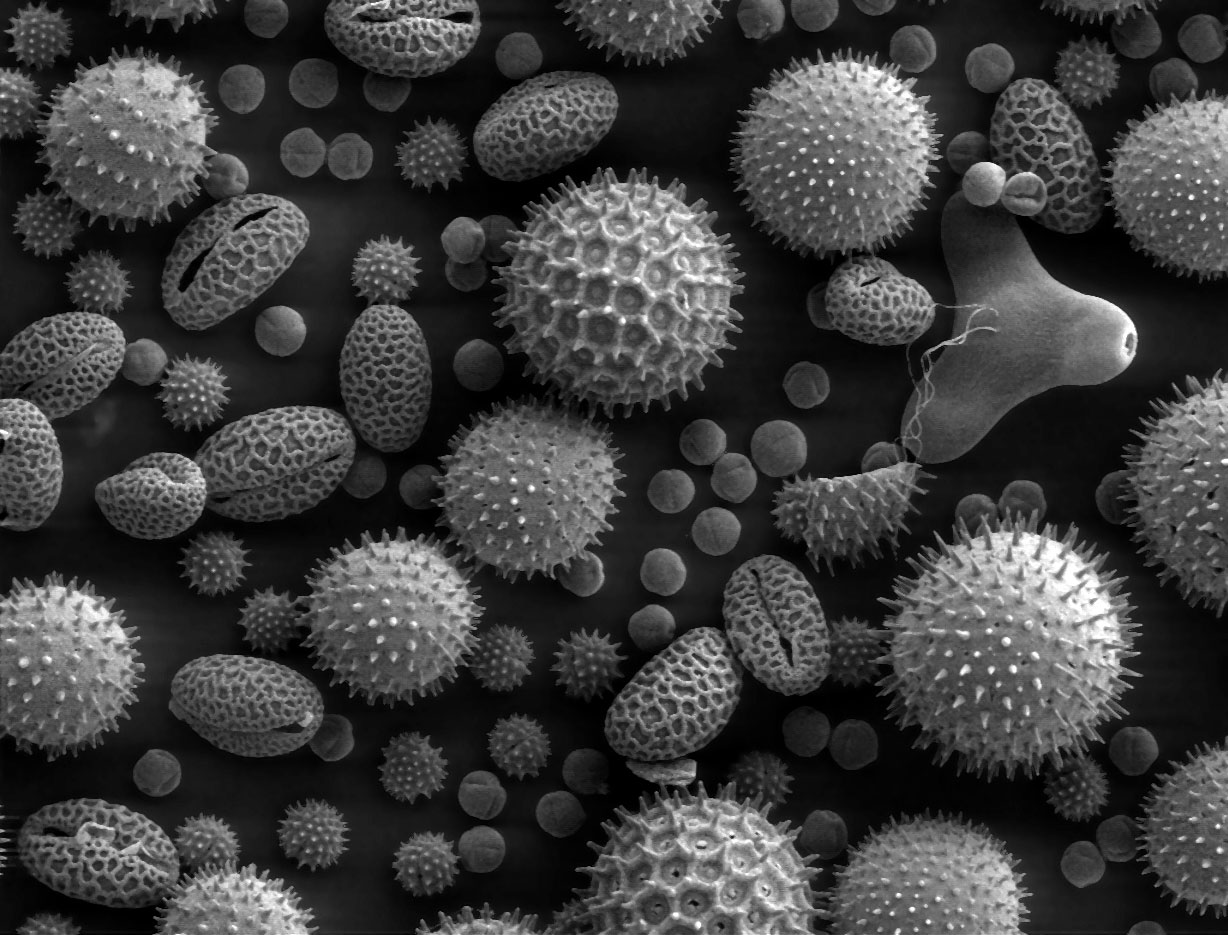
(not my SEM image.)

His piles are actually more than pigment. The mechanics of each grain of pollen is incredible, having emerged from millions of years of evolution. I’m reminded that “simple” pollen, like all life, is much more complex and awesome than the Mona Lisas we usually find in the museum.


After graduation I took an internship at an arboretum in Flagstaff, AZ. I did a variety of work there, and sometimes I spent hours in the wild grasses behind the arboretum collecting their seeds in bags for the collection. I’d just pull them off between my finger and thumb, as I walked by.

There is something so down-to-earth (humble, wholesome, patient) and meditative about tasks like these, and I imagine this is much like collecting pollen. Maybe this is some of the magic he is expressing, the kind of magic that’s easy to lose and forget about these days.


(not my photo.)


While bees feed on pollen (and feed pollen to their young), Laib exhibits and sells pollen to make a living. Maybe the acknowledgement that our lives depend on simple things like plants, air, and soil, and that we tap into these basic sources just like the common bee, is part of the magic.

Luckily we can experience these kinds of magic in the garden. No, not because gardens are full pollen (though I guess it could be). Gardens are places in which we can admire and interact with other life, where we can get back down to earth, and where we can directly tap into the systems that keep us alive (maybe by eating huckleberries from the bush).

Is Laib’s pollen collecting minimalist gardening?