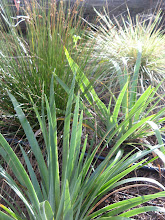
I see many leggy, ugly, misshapen shrubs. I want to cut it all back and let it sprout. Many people wonder if they can cut off diseased or mostly dead parts of plants, and I tell them yes. The plants will love it. The native plants too. Of course wildlife does like dead branches and things, but for the plant's sake and for the sake of a nice looking garden, pruning is desirable.
Coppicing is the harshest form of pruning. It's cutting the whole plant down to a couple of inches above the soil line, even if the plant looks fairly healthy. It's not for all plants, but it can be useful.
It can rejuvenate an older shrub by forcing it to send out new vigorous shoots. (I've heard many times that coppicing can also extend the life of a shrub/forb/grass.)
Coppicing some trees and shrubs creates a crop of straight sticks for use in basketry, wickerwork, or for other crafts.
It also can be used get a regular supply of conveniently-sized firewood. A regular coppicing cycle (say, coppicing some, not just any, tree species every seven or so years) can produce "five or even ten times as much burnable wood per acre per year as if you wait for mature trees." And the logs can be thin so that they won't need to be split. (This info comes from an essay in Field Days by Roger Swain. I haven't read it, but I've read about it from Last Person Rural by Noel Perrin.)
Coppicing is a tradition found in cultures all over the world including England (chestnut, willow, and hazelnut coppices especially) and the Pacific Northwest (the Yurok coppice many shrubs for basket materials and Philadelphus lewisii for arrow shafts).
So how can I use coppicing to my advantage?
Firewood
I need to find out which native species would be able to handle coppicing AND would be good for burning. Madrone is one of the best woods for burning around here, but I'm not sure it would resprout vigorously enough (plus we only have one on the lot and it's not doing so well). On the otherhand, redwood sprouts like crazy, but I don't think its that great for burning.
Garden Uses
These are species that have brightly colors stems or that are traditionally used.
Cornus sericea
Corylus cornuta
Salix spp.
(The invasive nonnative Cotoneaster is excellent for crafts and coppicing. It's bark is mottled gray and white when old, and the plants, despite every effort, always bounce back...Below is a trellis I made of it for my mother on mother's day. I'm really not crafty, for the record, though I would like to make my own fences and trellis one day.)
 For Appearances
I borrowed a book from work today called
California Native Plants for the GardenBy Carol Bornstein, David Fross, and Bart O’Brien. I was very pleased with it because it actually has species-specific pruning advice. I can't recall any other native plant book that does. Anyway here's a quick and dirty list I've compiled of the native plants they say you can coppice, supplemented with other species I've heard you can coppice:
Forbs:
California sunflower
Indian mallow
California fuchsia
Penstemons (they cut them down every late fall at The Arboretum at Flagstaff)
Ferns (really helps ragged-looking sword fern)
Mimulus aurantiacus (personal experience)
Graminoids (grasses, sedges, and rushes):
All of them can and should be cut down at the end of the growing season, according to John Greenlee's Encyclopedia of Ornamental Grasses.
Shrubs:
Garrya
Snowberry (every several years)
Western redbud
Cercis betuloides
Cornus sericea
Toyon
Myrica
Philadelphus lewisii (every five years or so)
Ribes sanguineum
Corylus cornuta
Coyote Brush
Salal
(According to Bornstein et al, shrubs that should not be coppiced include manzanitas and ceanothi.)

One plant that probably should be cut back twice a year is the tall herbaceous perrenial, Scrophularia californica (above). It looks horrible except in early spring, but the bees LOVE the flowers. Other insects love this speceis too, telling by all the holes in the leaves. It's really for the wildlife, but I'm going to experiment. I coppiced it last year and it was much bushier. Then it got ugly. Now it's putting on another round of growth and flowers atop it's ugliness. If I had cut it down after it's first wave of flowers it might be looking a whole lot better now.

Anyway, this late fall/winter (when coppicing should be done), I'm going to rejuvenate some of the plants on the lot. The Deschampsia caespitosa definetely has too much thatch. The coyote brushes could be less leggy. Many of the Mimulus aurantiacus plants could be bushier. (Last winter I cut back some of them and atleast one of them REALLY took off (above). Its form is really nice. This picture is from a couple of months ago).
Not all of the plants that can be coppiced, should be coppiced, of course. But if it offendeth thee, cut it off!

 The leaves of hazel are downy soft, especially in early spring, are more finely toothed than alder, and more ovular. I also really like their arrangement on the skinny flexible stems. Hazels also have very attractive catkins in spring. I think I've seen some female flowers too (they may have just been buds), but I haven't seen any nuts. Never.