Showing posts with label Thoughts. Show all posts

Sunday, September 7, 2008

Making Marks


First there was a weeping beech. Not only is the bark smooth and white (which makes carvings more legible that they would be on say, a black walnut), but the architecture of the tree creates seclusion—a place where one’s not as likely to be caught being a vandal.


To everyone that journeys under its canopy, the tree becomes their place, makes them feel a sense of discovery, that maybe they’re privy to this spot. And it's satisfying finding a curious shaded spot off the beat path after wandering on the sunny, public grounds of the Brooklyn Botanic Garden. It's a nice contrast.


It’s also interesting to see what people (individuals, couples, maybe even groups) carve when no one else is watching. And what do they carve?


Their identities. Some cool designs. The tree has been changed. Cuts are generally unhealthy for a tree. Weakens growth, exposes inner tissues to pathogens…and yet, in my opinion, the bark has become very beautiful. The most beautiful marks are the ones filled in with scar tissue, where the marks have had time to influence the tree’s growth—to become part of the tree. I didn’t feel the need to contribute (perhaps I’m more of a critic than a participant and besides, I like my trees healthy), but I bet the first cut was all it took to get the ball rolling. I wonder when it hit that threshold: when it became a community art project.


Same with this abandoned pumphouse in Manayunk. Brick, lumber, spray paint, human hands, and decay has created a rich texture.


Layers upon layers. Sublime.


(Don't worry, I was not alone. This was on a field trip with a class.)


We humans like to make a mark.

It's contagious.


Monday, June 30, 2008

Ugly/Beautiful

Here's a quick article from philly.com about an eccentric man and his garden. Skimpy on the gardening, but we share some thoughts:

"Ugly can sometimes be beautiful, but merely pretty can never be beautiful," he says. "Things that are really beautiful keep you coming back because they're not just attractive, they're compelling."

Tuesday, June 24, 2008

Phormium

I have a landscaper friend who had to leave town for a couple of months, so I've been doing the gardening for a few of her clients on the weekends. It's been fun.

Anyway, I want to remember this:

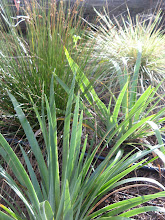
Forget landscape tape--that nasty oily tape that one has to buy, that may never biodegrade, and that usually stands out in a garden despite being green. The Phormium tenax growing in the pot over there has a few browning leaves it won't miss. Cut them off, shred them into a few strips. There. They work wonderfully.

Food, fiber, firewood, building material, medicine...what are the resources around you?

Sunday, February 3, 2008

Dark Forest Meditation


Susan from Garden Rant said that the Secret Garden was “simply too other-worldly for us to relate to.” But this is exactly the kind of garden I do relate to. And it seems that Piet Oudolf has been making mystical gardens like this for sometime.

What is it about the other-worldly, “dark Forest” gardens that appeals to me, anyway?

At the library, I stumbled upon a book called “The Power of Myth,” which is based on an interview between Bill Moyers and the late scholar of comparative mythology, Joseph Campbell. (I highly recommend it—it seriously reopened my heart to religion.)

I think there are a couple of “dark forest” things going on in my mind.

1. Anima mundi….the animated world, the world full of soul and souls. What do you think about this? Too pagan or romantic for your tastes?

I thought I had uprooted (or at least suspended) my belief in things like God four or five years ago. But to my surprise, beneath my former religion was the simple idea of anima mundi. I don’t even know where I picked this up (and I just found the term for the idea), but I believe it. Sure it’s a romantic idea, that the jay is our brother, that the same spirit runs through all of us, and that we can “Paint with All the Colors of the Wind.” But to me, it means that we are all part of the mystery of life. It means respect and reverence toward the people, animals, plants, and things around us.

2. The Hunter. Something interesting I learned in the Campbell book was that in the land of Canaan the people were farmers and they worshipped a goddess. The Children of Israel were hunters and shepherds and they worshipped the male god, Yahweh, who, according to Campbell, was a war god. It’s not surprising then that the Children of Israel ransacked Canaan, and not the other way around. I’m not a religious scholar. Let me just move onto my point: The farmer and the cowman should be friends. Everything needs a balance of yin and yang, of animal and plant, of masculine and feminine. I think the “dark forest” element in the garden is important to me because it makes the garden more animated, more manly, and, like Ellen said, more visceral.

But there will be no animal sacrifices in the garden.

3. History. I like moss, lichens, patina, ware, rust, and signs of past life, like this chimney on a trail in Petersburg, Alaska (Here with my brother, Peter the Tourist, last summer).


4. Nostalgia. When I was in middle school I was obsessed with the Prydain chronicles by Lloyd Alexander. It was, you know, about a boy who wants crazy adventures, gets caught up in them, wanders the land trying to find himself, finds his ancestry and inner strength, and becomes king. Campbell would have called this the classic hero myth, right up there with The Odysseus, Luke Skywalker, and King Arthur.

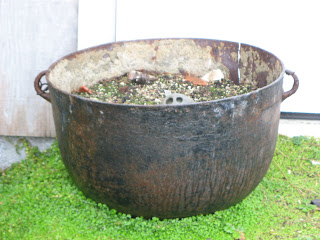
My neighbor's planter reminds me of The Black Cauldron. It could use some plants.


Friday, January 25, 2008

Collecting Pollen

(not my picture.)

A few years ago in a contemporary art class, I became aware of Wolfgang Laib, a German artist who spends whole days collecting pollen, usually from dandelions. He brings the pollen into museums and puts it in piles on the floor. How unusual.

True, there is something monastic about the look of these piles and his other work that appeals to me. Maybe because I draw with chalky pastels I can appreciate the glow of a simple pile of yellow pigment, but I suspect that there is more magic here.

So I’m thinking…

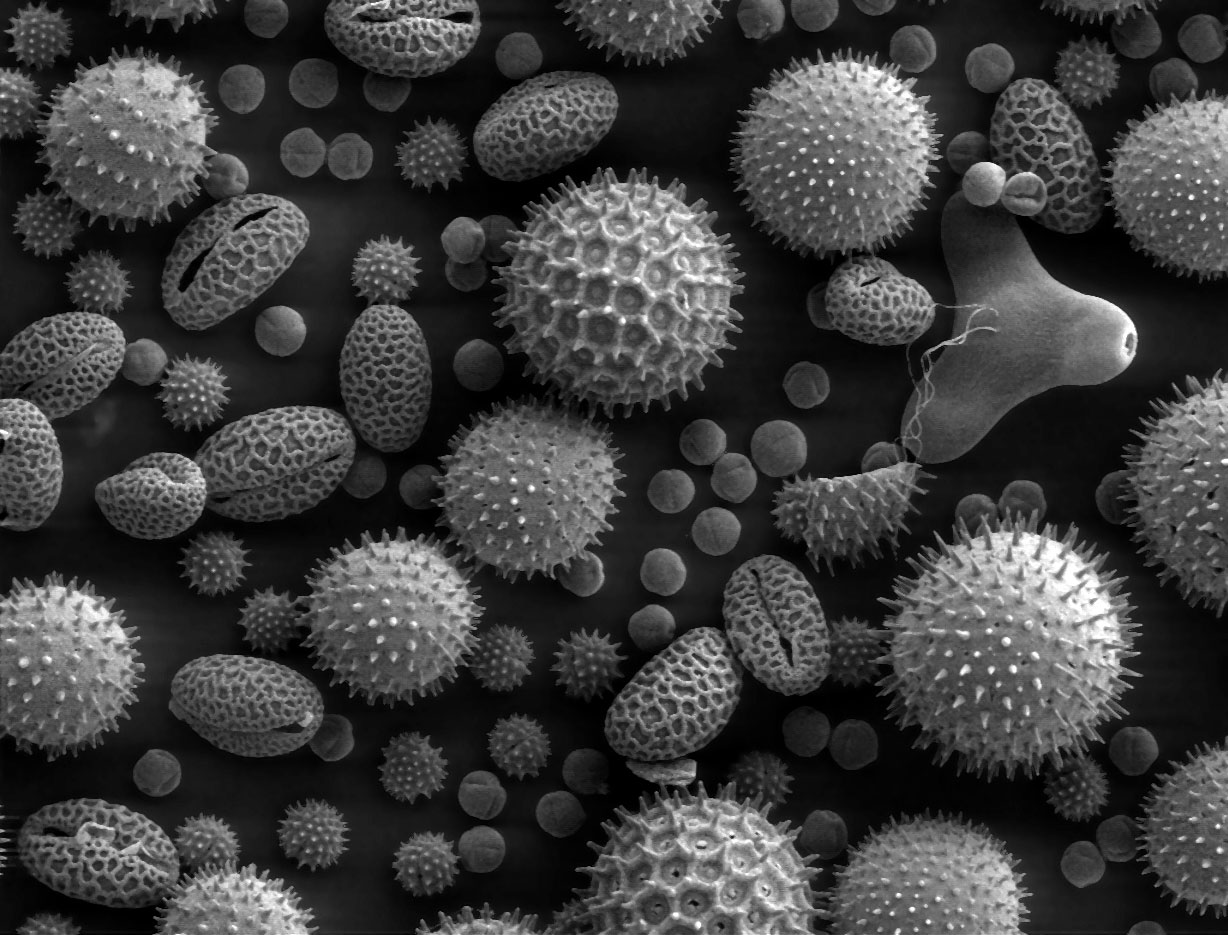
(not my SEM image.)

His piles are actually more than pigment. The mechanics of each grain of pollen is incredible, having emerged from millions of years of evolution. I’m reminded that “simple” pollen, like all life, is much more complex and awesome than the Mona Lisas we usually find in the museum.


After graduation I took an internship at an arboretum in Flagstaff, AZ. I did a variety of work there, and sometimes I spent hours in the wild grasses behind the arboretum collecting their seeds in bags for the collection. I’d just pull them off between my finger and thumb, as I walked by.

There is something so down-to-earth (humble, wholesome, patient) and meditative about tasks like these, and I imagine this is much like collecting pollen. Maybe this is some of the magic he is expressing, the kind of magic that’s easy to lose and forget about these days.


(not my photo.)


While bees feed on pollen (and feed pollen to their young), Laib exhibits and sells pollen to make a living. Maybe the acknowledgement that our lives depend on simple things like plants, air, and soil, and that we tap into these basic sources just like the common bee, is part of the magic.

Luckily we can experience these kinds of magic in the garden. No, not because gardens are full pollen (though I guess it could be). Gardens are places in which we can admire and interact with other life, where we can get back down to earth, and where we can directly tap into the systems that keep us alive (maybe by eating huckleberries from the bush).

Is Laib’s pollen collecting minimalist gardening?

Tuesday, November 20, 2007

CA Native Clovers


Thought about clovers today. If the native Trifolium wormskioldii (Springbank clover) is so cool, what about the other native clovers around here? I haven't noticed any other native clovers in the area, but according to Jepson there are 30 species native to CA (and several subspecies) and possibly 13 of those species are native locally (and are candidates for introduction to the "coastal prairie"). Unlike T. wormskioldii, most of the clovers are annuals, which makes introduction a bit more challenging.

Here are some potentials:

1. T. fucatum (annual) Bull Clover. This is my top choice for introduction because it's beautiful and distintive (see picture above, from CalPhotos). Also, seeds are available from Larner Seeds. Haven't ordered anything yet.

2. T. macraei (annual) Chilean Clover

3, T. microdon (annual) Thimble Clover

4. T. variegatum (annual) White-tipped clover. This one is unbelievable beautiful, based on photos from Calphotos.

5. T. eriocephalum (Perrenial)
If you would like to spend a good chunk of time perusing CA clover diversity, go to the CalPhotos website and type "trifolium" in the scientific name query box. Coupled with the Jepson Manual, CalPhotos is turning out to be a great tool for identifying natives, or just brainstorming what might be interesting to try in a garden.


Monday, October 22, 2007

Hazel

I fell in love with hazel the first time I stumbled upon it in our forest. That was a few years ago, so my plant eyes were just developing. My father and I were cutting a trail and I said to myself, hey this isn't just another alder. No offense, I like alders too.


The leaves of hazel are downy soft, especially in early spring, are more finely toothed than alder, and more ovular. I also really like their arrangement on the skinny flexible stems. Hazels also have very attractive catkins in spring. I think I've seen some female flowers too (they may have just been buds), but I haven't seen any nuts. Never.

In fall, it's especially apparent that our sweet little hazel tree is really a gargantuan thicket probably many hundred of years old. Here's a look at one of it's "stools":


I say "stool" because it is a term associated with coppicing, a woodland management strategy where you cut a shrub or tree to the ground every so often to encourage new vigorous sprouts from the base. Here, I have to put it in quotation marks. Or maybe it should have been a question mark because this may have infact been a thicket coppiced by the Wiyot people at one time. I couldn't find any evidence of burning, but I doubt ashes would still be around because the soil is a mass of compost and moss. How can I tell? And the stools(?) are covered in moss themselves so I just don't know. But because of our land's closeness to the Bay, I think it is very likely their people lived here at one time.


As you can see above, the thicket is pretty extensive and there are at least four or five main stools, and they may be connected (it's difficult to tell because it's a real jungle in there). Which brings me to expressing a quandry I've had since reading Before the Wilderness. I confess that I am a bit on the romantic side about old, mysterious, "dark forest" things, and yet over the last few months, especially after reading BTW, Wendell Berry, and Noel Perry, I'm becoming more and more swayed to the management side. The solution, I know, is to manage some of it and to hang onto some of the truly amazing old things in the forest. Should I do something with this thicket or just enjoy the jungle?.


Sunday, September 30, 2007

Native Horticulture

Native californians have been gardening with california plants for thousands of years. Hmm, maybe I could tap into that knowledge to the benefit of the land and myself.

I've already mentioned coppicing, but how about cultivation practices that improve berry production, seed germination, mushroom production, and what else? (And reducing fire loads in our forests). Knowing when and how much to take. AND how to encourage native biodiversity. I really have everything to learn.

Kat Anderson's "Before the Wilderness" is a book about this idea on a larger, land management level. Haven't read it yet, but it's at my library and hopefully I can get to it this week.

This is one of the most radical and potentially beneficial gardening ideas I can think of. It would strengthen the human/nature relationship and put deeper meaning into a garden.

At least one of the gardeners at Gardener Rant (see link at far right) rants about the idea of the "yardeners," I'm guessing those that want a no maintenance yard, instead of a garden they are actively engaged with. Well, maybe the ornamental garden isn't that far ahead of a "yarden." Maybe the next step would be to pretend there is no fence around our garden and plug our garden into the larger landscape. Blend the line between cultivated and noncultivated a bit. Maybe this is a way that nonnatives, like recent human migrants, broccoli, and what not, can become native. I don't know, these are just the beginnings of thoughts.

Wednesday, September 19, 2007

Work Thoughts

These are just some random, and somewhat obvious, thoughts I've had while working at the nursery. (Many thoughts have had to be cut. I'm trying to stay positive here.)

Skunk cabbage has a tuberish thing with long roots that are mostly unbranched, rubbery things that have rings like annelids, but more closely spaced. Reminds me of mandrake (isn't that the screaming plant in the first Harry Potter movie?).

Weed pots, especially weed out alders and willows before they become full size trees! The trees can be salvaged, but the root systems are bound and usually lopsided, while the intentional plant is nearly dead or dead.

Wind barriers are very important at a nurery with trees. Stakes are important too, but make sure you don't buy stakes that need support themselves. Oh and invent something that will keep treepots reliably upright. Unless you are going for bonsai materials, don't let young trees grow crooked. And nearly all trees should be single-trunked, if you ever want to sell them.

Soil sterilizer, I wish I had one. But is there not a low-tech alternative? My faith in the composting process isn't that strong. I have a compost pile that I completely neglect. Composting is a real weakness of mine!

Seed propagation. It surely must be the noblest form of propagation. Must become a seed master. I do not like wild collecting, especially on a large scale, especially for profit. I don't mind taking a snip here or a seed capsule there.

Wouldn't it be cool to have woven old-english stlye fences everywhere? With a hedge of wild roses and hazels behind it? And geese running around keeping the grass down? Old England meets native California culture and plants. This is the Garden of La Mancha.

Organization on the grounds and in the books is "importante" for a business. So are clean, sharp, tools. Yes tools. You know, I really would like a scythe. Why don't we use them anymore? I also would like a pruning knife. And a watering can with a rose attachment.

All by-products need to become products. When I coppice my grasses and rushes this year I'll have native straw for mulch. Some of the "weeds" (only the natives) can be potted up. Things must be reused. Close the loop!

Sunday, September 16, 2007

The Righteous Garden

This gardener fights for the right and struggles to find out what "right" means. It's not easy, but this is my quest. And there are somethings I'm able to grasp as being right and good.

These include: Gratitude, Diversity, and Hope. The idea of diversity pops up over and over again in my life and has led me to some conclusions about life that can, of course, be applied to the garden.

Things to Apply to Your Garden.

Native Plant gardeners are often accused of being self-righteous and sometimes xenophobic. And maybe some of us are, and maybe part of me is. But I'm cautious of falling into these categories, and that says something. I can't speak for all native plant gardeners, so I'll speak only for myself.

Like I've said, I believe in diversity. In culture and in ecology. It's good to have as many angles as possible so that we can carve out truths. (I choose to believe in truths, call me a modernist. I choose to believe in diversity, call me a postmodernist). And a wide range of ideas keeps our culture running smoothly and gives us options. But beyond all the practical reasons for salvaging and creating diversity, the need, beyond these reasons I want diversity. It keeps life interesting.

The Garden of La Mancha prioritizes thus:

1. Food--the best way to be happy and responsible is to provide for oneself as much as possible. Heirloom varieties are preferable for agricultural diversity's sake.

2. Natives--the best way to keep the local biodiversity going.

3. Beauty--is that well-tended garden with wild corners. Beauty will be expressed as much as possible with edible and native plants. Non-native, non-food producing ornamentals, will be chosen with great care and must be absolutely irresistable to be included in the garden.


4. The garden should never be static. There will always be new projects and experiments. So plants will come and go. It will be an ecosystem with successions within successions and some disturbances.

Perhaps the heirarchy is more like a food pyrimad, with edibles on the bottom, natives in the middle, and eye-candy on top. (Too much variegated and colorful foliage, and too many gawdy flowers gross me out). Of course, if you have a lot of land, you may want to let more of it grow wild.

To me, the thoughts that a plant is useful or native adds beauty to it. It's similar to how heavy whole wheat bread tastes better to me becuase of the thought that it is good for me. This is why a native plant with a few holes in the leaves is more beautiful, than the invasive gawdy non-native plant down the street.

Never invasive non-natives.