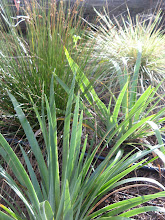
Inch for inch, Japanese dry gardens pack a lot of power. But I'm glad that it's contained to a small courtyard because (inch for inch) it's not the greatest space for biodiversity or productivity.
And if it sprawled out, it would lose its magic and become a golf course.
I like a healthy balance of modernism and postmodernism. I like beauty and the sublime, but there is more to life than aesthetics. There are other things to express, and there are means for expression other than color, form and texture. I don't have to limit myself to expressing one thing either (as cool as that focus is in the dry garden).
Here are some of the things I’m trying to express in Bayside:
1. The value and coolness of local biodiversity. Leave a brush pile for the shrews. Encourage the Scrophularia. Call it performance art.
2. The dark forest myth. (It’s not clear why exactly, but this really resonates with me. The surrounding landscape and those fantasy novels I read as a kid are probably responsible.) This, at least in part, is leaving the creepy side of nature intact and the idea of artifacts.
3. Stewardship. Our need of the land, and the land’s need for us. I became a gardener a few years ago to make everything in Bayside look “natural.” I now like the idea of coppices, crops, and compost piles within the wilder landscape. I am especially drawn to traditional land management techniques like burning and coppicing. Sometimes I use a stick to dig my planting holes, no joke. This is partly responsible.
What I’m really trying to express is my idea of paradise. For me, paradise is not just “pretty.” It’s ferociously beautiful, diverse and productive. And I get to live in it.
And if it sprawled out, it would lose its magic and become a golf course.
I like a healthy balance of modernism and postmodernism. I like beauty and the sublime, but there is more to life than aesthetics. There are other things to express, and there are means for expression other than color, form and texture. I don't have to limit myself to expressing one thing either (as cool as that focus is in the dry garden).
Here are some of the things I’m trying to express in Bayside:
1. The value and coolness of local biodiversity. Leave a brush pile for the shrews. Encourage the Scrophularia. Call it performance art.
2. The dark forest myth. (It’s not clear why exactly, but this really resonates with me. The surrounding landscape and those fantasy novels I read as a kid are probably responsible.) This, at least in part, is leaving the creepy side of nature intact and the idea of artifacts.
3. Stewardship. Our need of the land, and the land’s need for us. I became a gardener a few years ago to make everything in Bayside look “natural.” I now like the idea of coppices, crops, and compost piles within the wilder landscape. I am especially drawn to traditional land management techniques like burning and coppicing. Sometimes I use a stick to dig my planting holes, no joke. This is partly responsible.
What I’m really trying to express is my idea of paradise. For me, paradise is not just “pretty.” It’s ferociously beautiful, diverse and productive. And I get to live in it.


 After they were sauteed with a bit of butter, they shrunk down quite a bit, into these black slug-like things. But they tasted good. Like an over-cooked button mushroom, but with a deeper flavor.
 No. It's pepper.